
Doku — The Lost Chronicle · Episode 5 / 7

All episodes

DokuOpal

Wind, sand and sea

The Pas-de-Calais coast

From south to north, the Opal Coast: the beach of Berck and its kites, the great harbour of Boulogne-sur-Mer and Nausicaá, the cliffs of Cap Gris-Nez and Cap Blanc-Nez, then Calais, its lace and its dragon. Pip changes outfit with every chapter, from little kite flyer to little lace-maker, and every zone won gives back a sourced page of the coast's history. Six mini-games wait along the way, from the tide at Berck to Blériot's little plane.

The Mist

The Mist of the Open Sea, made up for the game: it is the sea mist, which is real enough, turned nasty by the Grey Mist. It pins Berck's kites to the sand, casts ghost nets over Boulogne's harbour, blows a storm across the cliffs of the Two Capes and unravels the lace of Calais. Its Mistlings are shaped like the things the wind carries off and the things left lying on a beach.

4

chapters

6

mini-games

12

notebook species

The real history

What the episode tells

The name "Opal Coast" was coined in 1911 by the painter Édouard Lévêque, struck by the changing light of this shore. In Berck, from 1857, Dr Paul Perrochaud entrusted sick children to the good sea air, and in 1869 Empress Eugénie opened a big hospital there: Berck became a town of hospitals. In Boulogne-sur-Mer, Batisse and Zabelle, a fisherman and his wife, became giants in 1923, and Nausicaá, the French National Sea Centre, opened there in 1991. Cap Gris-Nez is the point of the French coast closest to England, some thirty kilometres away; a little further north, at Les Baraques near Sangatte, Louis Blériot took off on 25 July 1909 for the first crossing of the Channel by aeroplane. In Calais, the first Leavers lace machine arrived from England in 1816, and Calais-Caudry lace has had its geographical indication since 2024. Rodin's six Burghers of Calais, set up in the town in 1895, now stand in front of the town hall; and since 2019 the mechanical dragon of the La Machine company has walked along the seafront with passengers on its back.

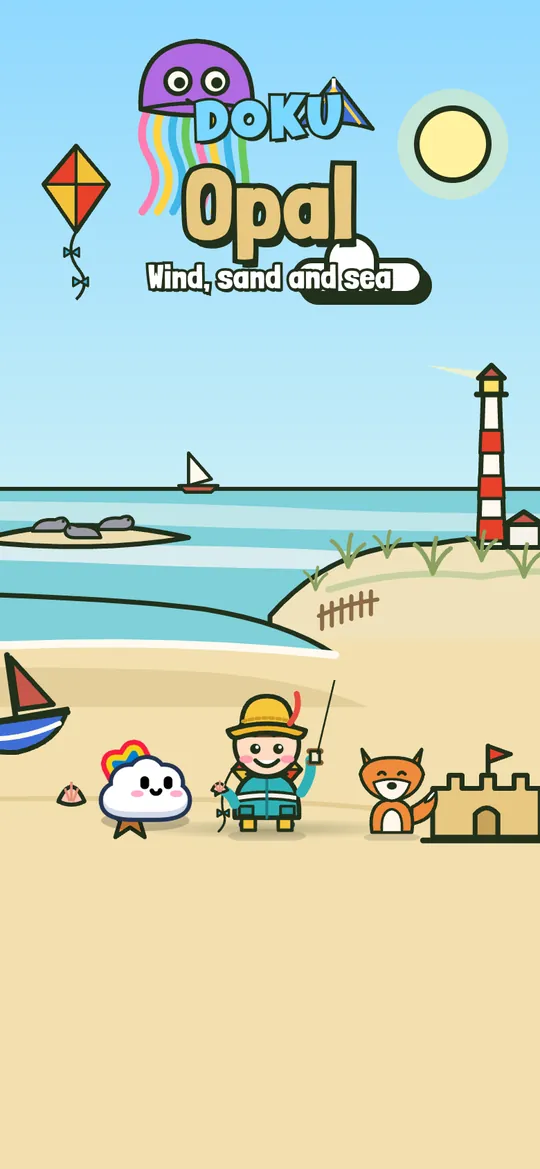
The episode's home screen in the game

Key dates

  1. 1

    1347

    In besieged Calais, six leading citizens give themselves up to the king of England; Queen Philippa wins their pardon. Rodin will sculpt them.

  2. 2

    1816

    The first Leavers machine arrives in Calais from England: the town becomes the town of lace.

  3. 3

    18 July 1869

    Empress Eugénie opens the seaside hospital in Berck, to care for children in the sea air.

  4. 4

    25 July 1909

    Louis Blériot flies across the Channel, from Les Baraques, near Calais, to Dover.

  5. 5

    1911

    The painter Édouard Lévêque coins the name "Opal Coast", for its changing light.

  6. 6

    1923

    Batisse and Zabelle, a fisherman and his wife, become the giants of Boulogne-sur-Mer.

  7. 7

    1949

    Berck lighthouse, 40 metres of prestressed concrete in red and white rings, is built.

  8. 8

    1987

    The first International Kite Festival on the beach at Berck.

  9. 9

    18 May 1991

    Nausicaá, the French National Sea Centre, opens in Boulogne-sur-Mer.

  10. 10

    2019

    The La Machine company's dragon comes out for the first time in Calais.

The chapters

Chapter by chapter

  1. Chapter 1

    Berck, wind and seals

    In Berck-sur-Mer, the Mist of the Open Sea has pinned the kites to the sand. Bring back the wind and the colours… without disturbing the seals!

    Pip is
    a little kite flyer
    He throws
    spinning seashells
    You cross
    the esplanade and the seaside hospital, the festival ground, the dunes, the foot of the lighthouse, the edge of the Authie bay and its beached boats, the great sandbank
    The guardian (made up)
    the Mist Octopus

    Chronicle pages

    • 18 July 1869Empress Eugénie opens the Hôpital Napoléon, a big hospital at first only for sick children, cared for in the sea air. Others follow, and Berck becomes a town of hospitals.
    • 1836-1949After a first light in 1836, today's lighthouse is built in 1949: 40 metres tall, in prestressed concrete, which is unique in France, and painted in red and white rings.
    • 1987The International Kite Festival is born to celebrate the hundredth anniversary of the first photo of the beach taken from the sky. Every spring, giant kites (octopuses, whales, dragons) fill the sky over Berck.
    In the notebookGrey sealOystercatcherSea holly
    Companion wonGull
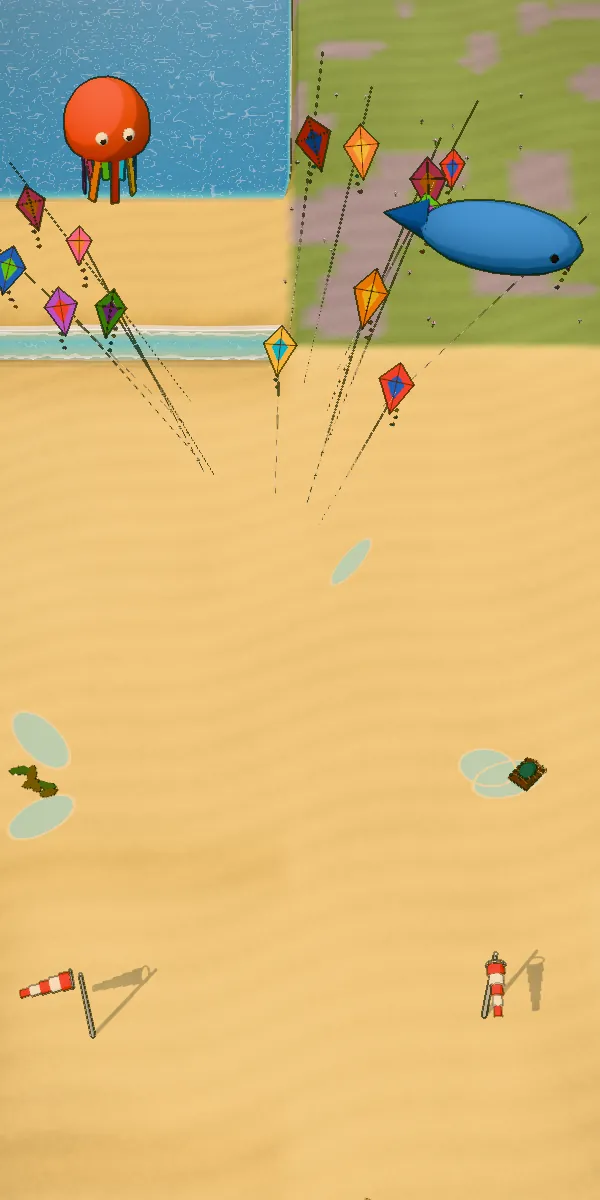
    Game screenshot — Berck, wind and seals
  2. Chapter 2

    The great harbour

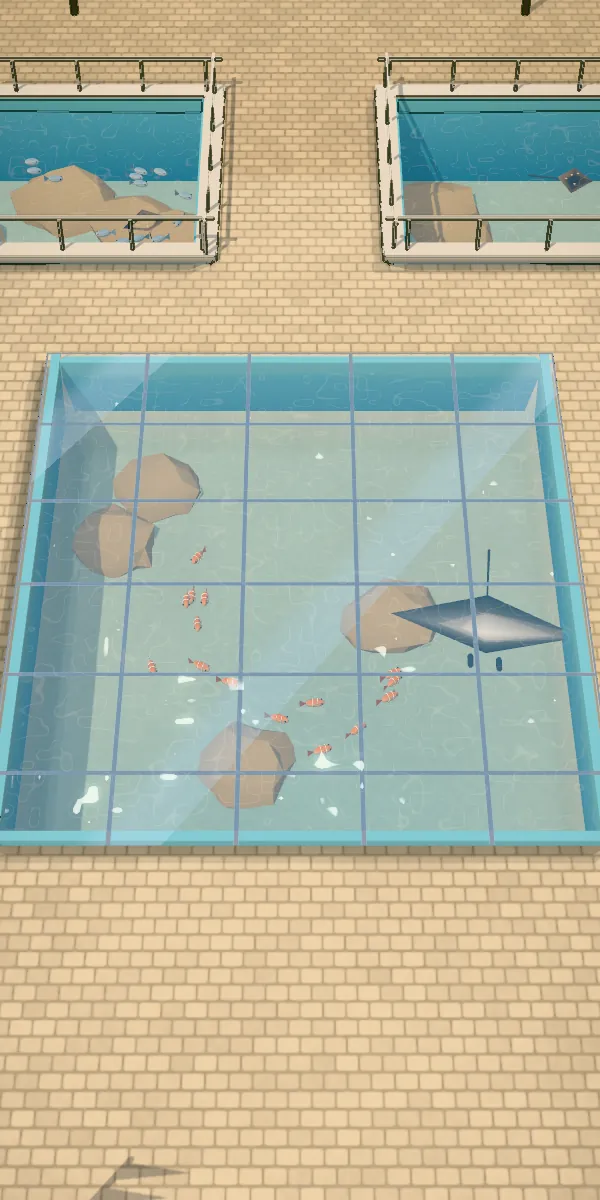
    In Boulogne-sur-Mer, the Mist of the Open Sea has cast ghost nets everywhere, even over Nausicaá's pools. Set the sea free… and find the giants of the Sea Festival!

    Pip is
    a little diver
    He throws
    bubbles
    You cross
    the walled upper town and the Porte des Degrés, the quay and its trawlers, the rocks at the foot of the cliff, Nausicaá's pools, the great tank, the sea wall
    The guardian (made up)
    the Great Ghost Net

    Chronicle pages

    • 1923Batisse and Zabelle, a fisherman and his wife, become giants in Boulogne-sur-Mer for the first time. Today's couple, the fourth, was made again in 2003: Batisse carries a rolled net on his shoulder, Zabelle her lace "sun".
    • 18 May 1991Nausicaá, the French National Sea Centre, opens in Boulogne-sur-Mer; its architect is Jacques Rougerie. With its great open-sea tank of 10 million litres, it is now the largest aquarium in Europe.
    • todayLost or abandoned at sea, nets and other fishing gear go on catching fish: it is called "ghost fishing". In the Channel, Ifremer's citizen-science programme Fish & Click records the gear reported by fishers, boaters, divers and walkers.
    In the notebookKittiwakeCommon starfishThornback ray
    Companion wonFinny
    Game screenshot — The great harbour
  3. Chapter 3

    The Two Capes

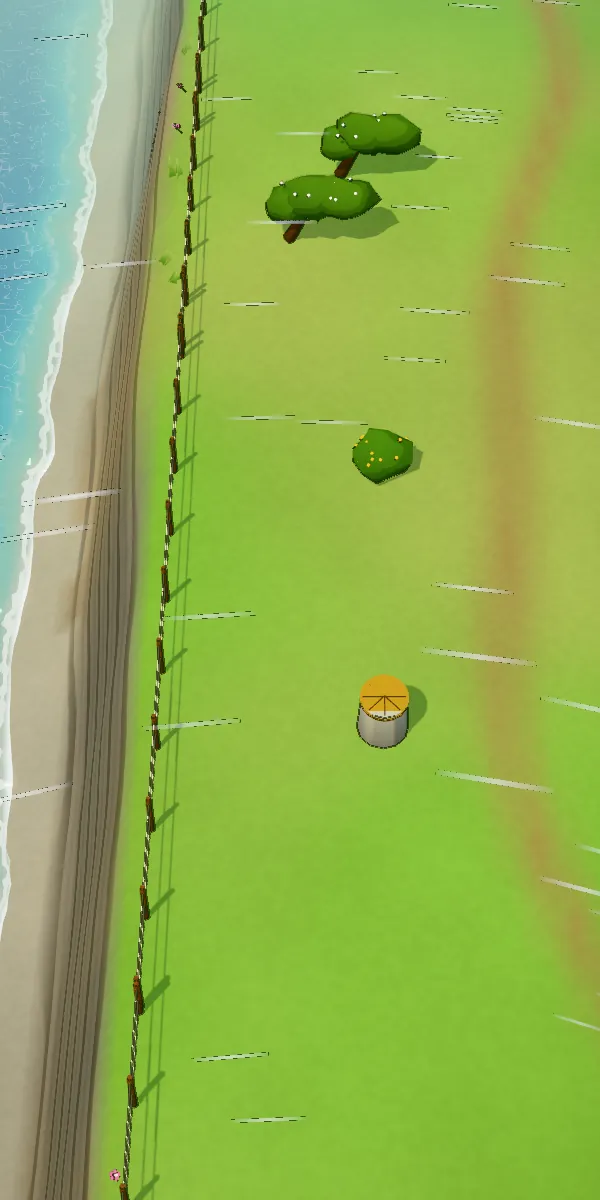
    On the cliffs of Cap Gris-Nez and Cap Blanc-Nez, the Mist of the Open Sea is blowing a storm: Blériot's little plane cannot take off. Chase the wind away… and watch it fly to England!

    Pip is
    a little aviator
    He throws
    paper planes
    You cross
    the top of Cap Gris-Nez and its lighthouse, the bird-watching post, a farm above the bay of Wissant, Wissant beach, the climb to the top of Cap Blanc-Nez, the take-off meadow
    The guardian (made up)
    the Mist Blower

    Chronicle pages

    • 25 July 1909At daybreak, Louis Blériot takes off from Les Baraques, near Calais, and lands at Dover 36 and a half minutes later: the first crossing of the Channel by aeroplane.
    • todayCap Gris-Nez is the point of the French coast closest to England, some thirty kilometres away: on a clear day, you can see the English coast. Its cliffs of clay, sandstone and sand date from the Jurassic.
    • 29 March 2011The Two Capes, from Cap Blanc-Nez to Cap Gris-Nez, receive the "Grand Site de France" label: the ninth in France, over eight villages and 7,505 hectares of cliffs, dunes and meadows.
    In the notebookGannetFulmarBoulonnais horse
    Companion wonNimbus
    Game screenshot — The Two Capes
  4. Chapter 4

    The lace and the dragon

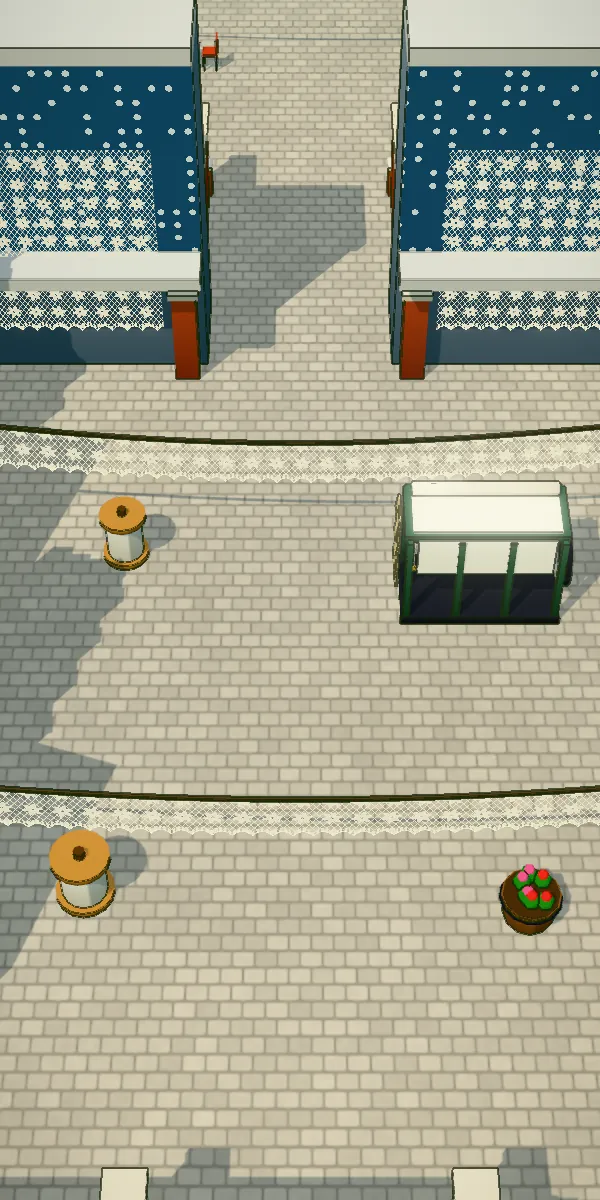
    In Calais, the Mist of the Open Sea has unravelled the town's lace, and the mechanical dragon is asleep on the beach. Weave the lace again… and wake the dragon!

    Pip is
    a little lace-maker
    He throws
    lace rosettes
    You cross
    the square in front of the town hall and Rodin's Burghers, the Lace City, the Place d'Armes and the watchtower, the Courgain and its lighthouse, the beach and its huts, the sea wall
    The guardian (made up)
    the Mist Spider

    Chronicle pages

    • 1347A king of England has been besieging Calais for eleven months, and the town is starving. He demands that six leading citizens come and give themselves up to him: Eustache de Saint-Pierre volunteers first, five others follow, and Queen Philippa wins their pardon.
    • 1816The first Leavers lace machine, made in England, arrives in Calais. Before the First World War, the town has 2,744 of them, and 31,000 people work in lace.
    • 2019The Calais dragon, designed by François Delarozière for the La Machine company, makes its first outing from 1 to 3 November: 25 metres long, about 72 tonnes. Since 17 December 2019, it has carried passengers on its back.
    In the notebookHarbour porpoiseSandwich ternSanderling
    Companion wonGribouille
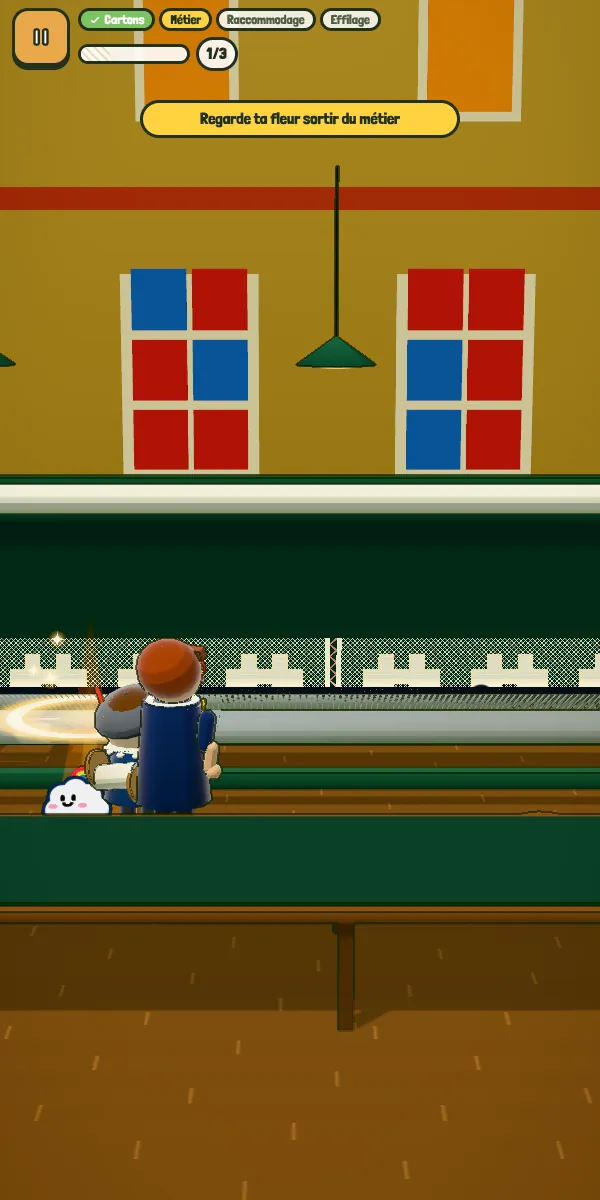
    Game screenshot — The lace and the dragon

The mini-games

Another way to play

They open once their chapter is won: no fighting, no Mist, just a place and a skill.

  • Pip's kite

    After the chapter “Berck, wind and seals”

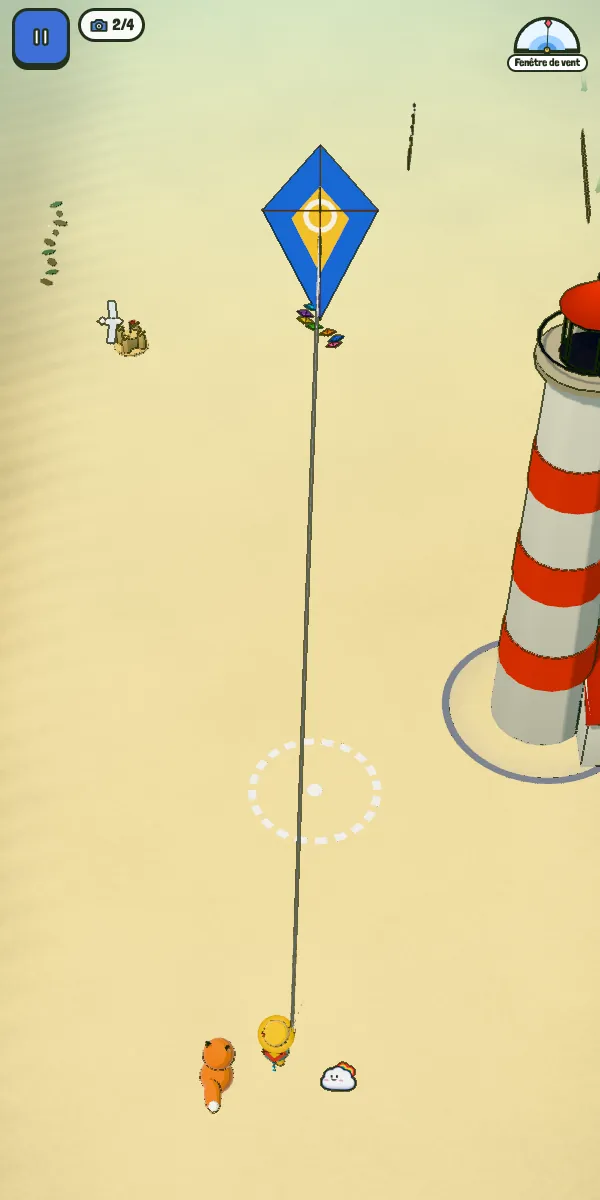
    At Berck, fly a camera kite like Émile Wenz, and photograph the beach… from the sky!

    What you learn

    How the first photos were taken from the sky: in 1888, Arthur Batut hangs a camera under a kite, and a slow-burning tinder fuse sets it off on its own. A few years later, Émile Wenz photographs the beach of Berck from above the same way.

    Game screenshot — Pip's kite
  • Pip's tide

    After the chapter “Berck, wind and seals”

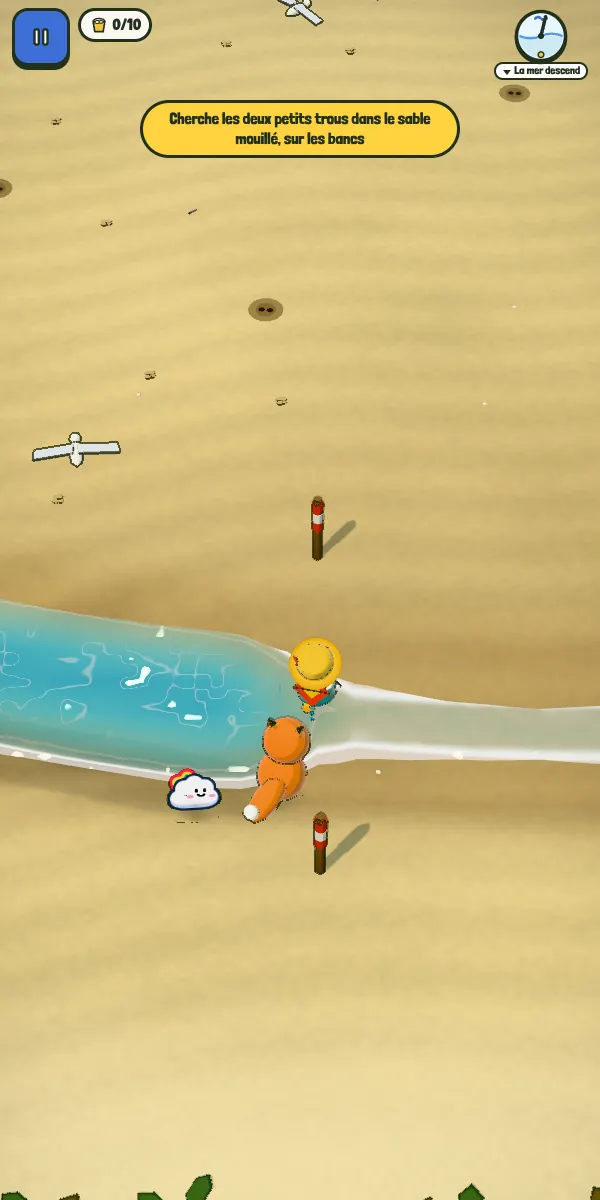
    On a big-tide morning in Berck, dig for cockles on the sandbanks… and get back in time: the sea is coming in!

    What you learn

    When you go shellfishing on foot, the signal to head back is the time of low tide: the way back always takes longer than the way out, and the rising sea can surround a sandbank that is still dry, even from behind. Never go alone.

    Game screenshot — Pip's tide
  • Pip's dive

    After the chapter “The great harbour”

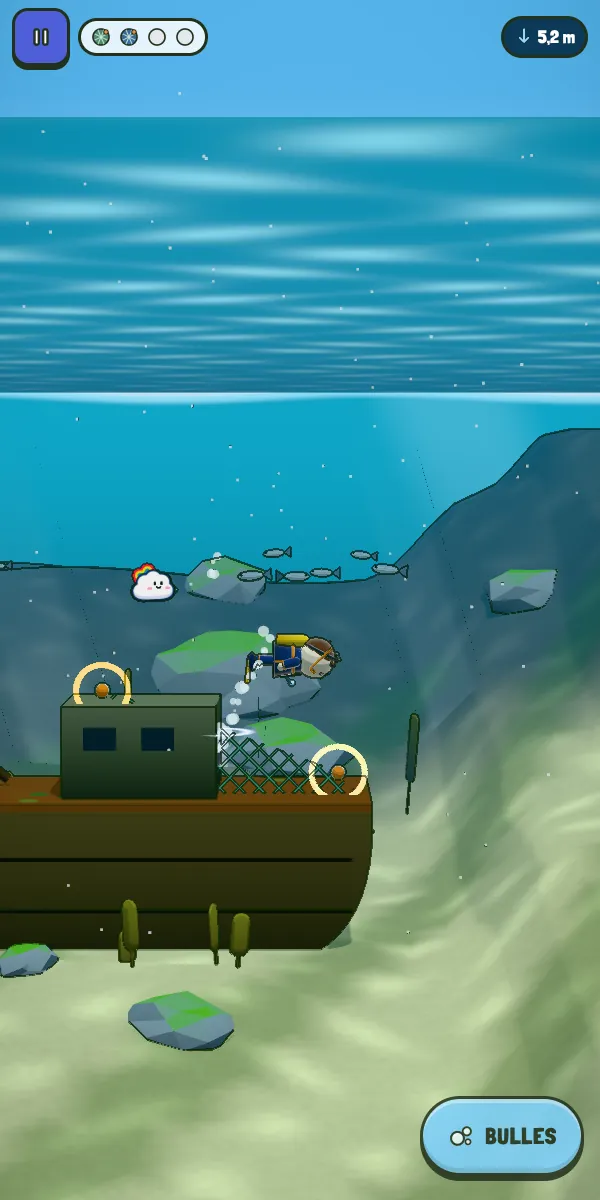
    Off Boulogne, lost nets — ghost nets — are trapping animals. Dive, cut them free with your bubbles and bring them up!

    What you learn

    Divers' hand signals: underwater, a thumbs-up does not mean "great", it means "we're going up"; "all is well" is a circle made with the thumb and forefinger.

    Game screenshot — Pip's dive
  • Pip's little plane

    After the chapter “The Two Capes”

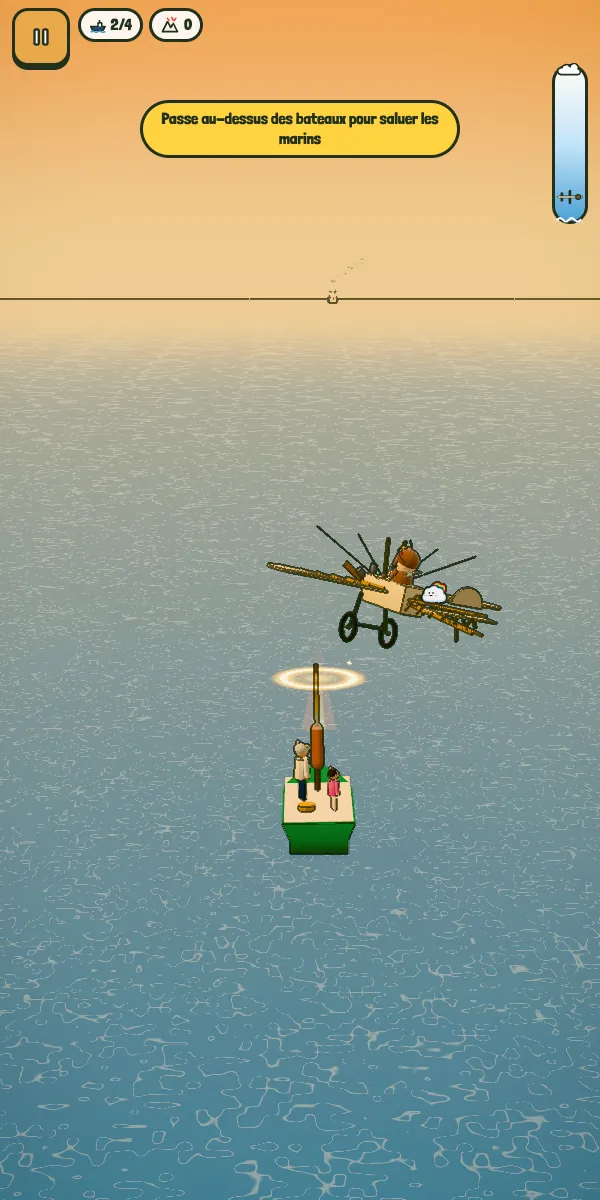
    Fly the replica of Blériot's little plane across the Channel, from Calais to Dover!

    What you learn

    How Louis Blériot found his way on 25 July 1909: he had no compass, so he followed the ship heading for Dover; blown east by the wind, he saw the English coast on his left and followed it to a meadow near Dover Castle.

    Game screenshot — Pip's little plane
  • Pip's dragon

    After the chapter “The lace and the dragon”

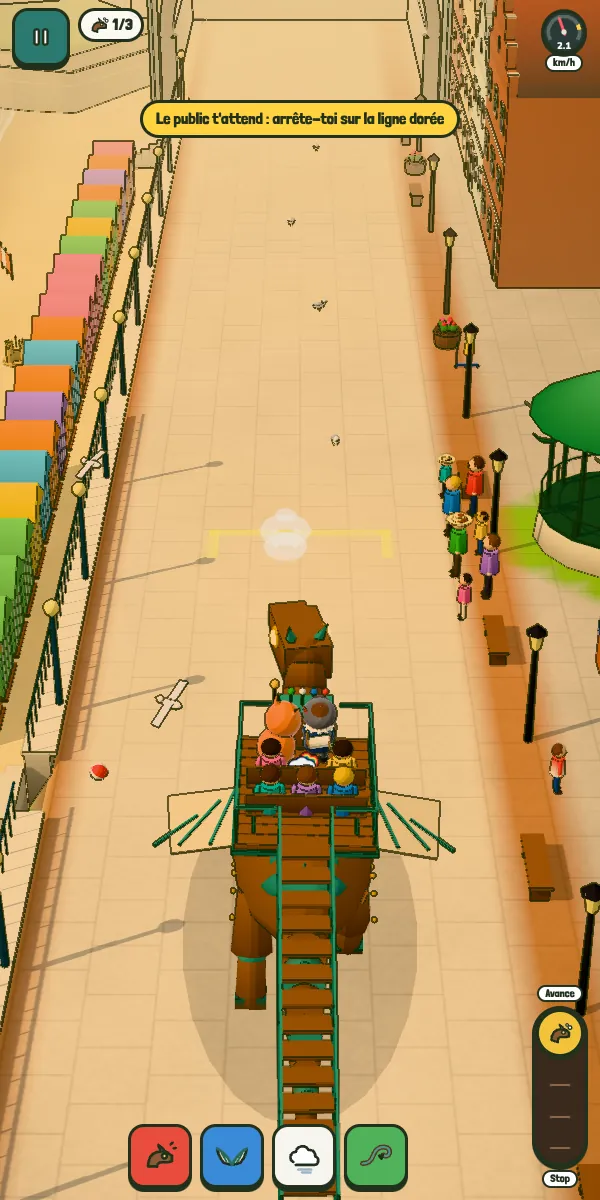
    In Calais, drive the mechanical dragon along the seafront, passengers on its back: brake in time, and put on a show!

    What you learn

    The real Calais dragon, designed by François Delarozière for the La Machine company: 25 metres long, 72 tonnes, it moves at up to 4 km/h, machinists work it, and a staircase in its tail leads up to its passengers' terrace. The game's dragon is made up.

    Game screenshot — Pip's dragon
  • Pip's lace

    After the chapter “The lace and the dragon”

    Punch the cards, run the Leavers machine and mend a Calais lace with Rose, the tulliste!

    What you learn

    How a lace is "programmed": the pattern is punched into cards laced together, one card per row; a hole, and the thread moves, no hole, and it stays. The idea comes from the Jacquard loom, patented in 1804, and punched cards later ran calculating machines.

    Game screenshot — Pip's lace

With care

What the game makes up, what it doesn't show

  • Pip, Russet, Hoot, the Grimoire, the Mist of the Open Sea, its Mistlings and its four guardians (an inflatable octopus, a great net, a wind face from old sea charts, a spider) are made up, like Rose, the lace-maker. The real animals of the notebook are peaceful: you watch them, you never fight them.
  • No moral lesson: the Mistlings are shaped like what the wind carries off or what lies about the harbour, and the game shows a coast getting its colours back. Ghost nets are told for what they are, with the people who bring them up.
  • You never go near the seals: they stay lying on their sandbank, across a channel, and you watch them through a telescope. Pip never flies off with his kite, and he is never a child at work.
  • The game's dragon is its own, made of wood and copper with lantern eyes, and it never breathes fire. The real Calais dragon is a work by the La Machine company: the game tells about it, it does not copy it.
  • No war, no soldier, no weapon, no flag: the siege of 1347 is told by a page ("a king of England was besieging the town"), and Rodin's Burghers are six bronze figures on their plinth. The replica of the Blériot XI and its anniversary flight are made up.
  • The routes through Berck, Boulogne, the Two Capes and Calais are imagined, in the order of the coast. Nausicaá is shown open to the sky: the real tanks are indoors, behind glass.

For real

Go and see the places

Coming soon onGoogle PlayLater onApp Store