From coal to green slag heaps: the mining basin in Doku — The Lost Chronicle
The second episode of Doku — The Lost Chronicle, In the land of the miners, tells the story of the Nord–Pas-de-Calais mining basin: a landscape of pits, miners' towns and slag heaps that stretches across two French departments, the Pas-de-Calais and the Nord. Pip follows coal from the forest where it was born to the museum standing on a former pit. The whole episode is on its page, the other six on the game's page.
300 million years ago, a forest in a swamp
In the Carboniferous, "the coal-bearing age", our region lay near the equator: it was hot and damp all year round. A forest grew in a great swamp by the sea, the "coal lagoon"; the ground sank little by little, and the water drowned the forest, again and again. Leaves, bark and trunks fell to the bottom, away from the air. Buried, squeezed and heated for millions of years, they became coal. Going down a mine is going back in time.
Lepidodendron, a tree whose trunk was covered with scales, could grow 30 to 40 metres tall. Meganeura, a cousin of the dragonflies, had wings about 70 centimetres across, and Arthropleura, a millipede about 2.6 metres long, is the biggest arthropod we know of. The slag heaps, made of the rock brought up with the coal, are full of prints from that forest.
In the game, the Grimoire shows Pip a black stone picked up on a slag heap, the print of a fern, and takes him to see it grow. Pip wears a lamp helmet, and his shots are flashes of light. The Soot Mist, made up for the game, wants everyone to forget where coal comes from; its Mistlings are mud bubbles and midges. The real animals are peaceful: you watch them, you never fight them.
The pit and the miners' town
On 3 February 1720, prospectors reached coal at Fresnes-sur-Escaut, in the Nord: the beginning of the mining basin. For 270 years, miners went down below. The companies built rows of identical brick houses with gardens for them: the corons. In Bruay-la-Buissière, the Cité des électriciens, built from 1856 to 1861, is the oldest restored miners' town in northern France; it has been open to visitors since 2019. Underground, horses pulled the coal tubs; the last one in the basin, Bambino, came up in 1976. Workers of 29 nationalities came to the mines, among them Poles, Italians, Algerians and Moroccans. On 21 December 1990, the last lump of coal came up at Oignies.
Long ago, children worked in the mines; the law of 19 May 1874 banned work underground before the age of 12. The game says so, it does not show it: Pip is a visitor, never a child at work. His guide, Lucien, a former miner, is made up, like the former miners who show visitors round the Lewarde mining history centre. The Mist there takes the shapes of what miners feared: rolling lumps of coal, runaway tubs, wisps of firedamp. Its guardian, the Great Firedamp, is a game cloud, not the real gas, and no accident is shown. The Courrières disaster of 10 March 1906, the worst mining disaster in Europe, is told by a page: the rescuers who came from Germany, and the thirteen survivors who found their way back to the shaft twenty days later.
Slag heaps: black mountains turned green
Along with the coal came shale and sandstone, piled up near the pits as cones or plateaus: the slag heaps. The basin had about 350 of them; some 200 are left. At Loos-en-Gohelle, the twin heaps of the 11/19 rise to 186 metres, among the highest in Europe. Nature has come back: their black stone holds the sun's warmth, and on the heaps of the 11/19, 159 kinds of animals and 190 kinds of plants have been counted.
On 30 June 2012, Unesco inscribed the Mining Basin on its World Heritage List as a "living, evolving cultural landscape": 353 elements, among them 17 pits, 21 headframes, 51 slag heaps and 124 miners' towns. On 4 December that year, Saint Barbara's Day, the miners' patron saint, the Louvre-Lens opened on the yard of Lens's former pit number 9.
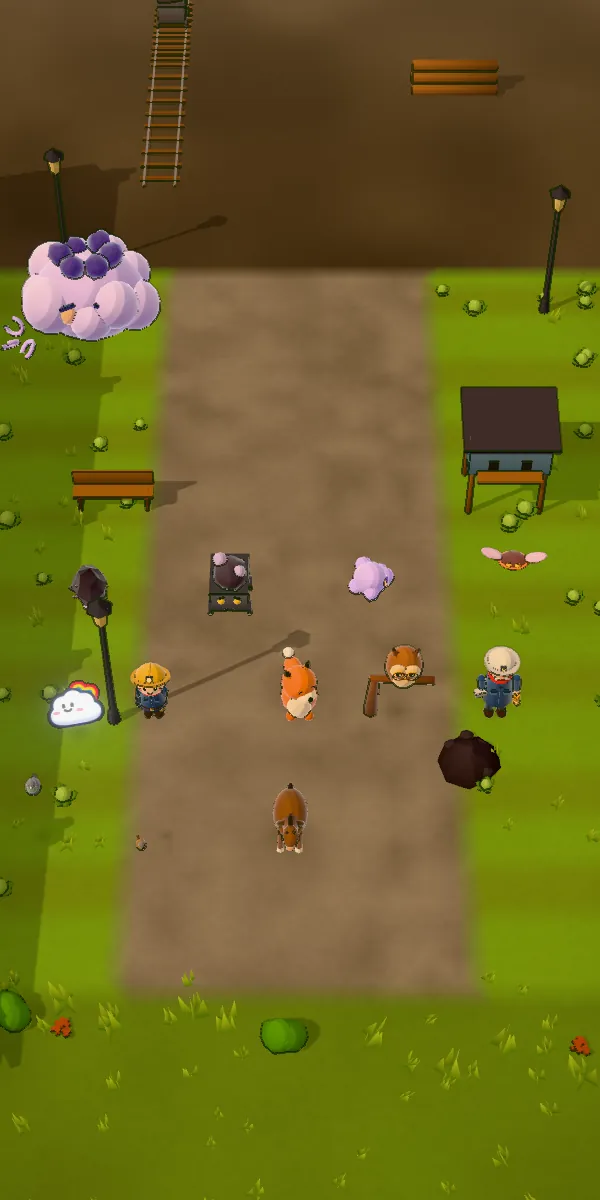
In the game, Lucien takes Pip up a slag heap along an old cavalier, one of the mine's railways. The guardian, the Shale Golem, crumbles, and young birches grow out of the stones. The chapter ends without a fight in the park of the Louvre-Lens, shown from outside, without any artwork. The natterjack toad, the swallowtail and the icterine warbler, a little bird that spends the winter in Africa, go into the notebook.
Two mini-games
In "Pip's pit", Lucien shows you round his pit: you go down in the cage, talking to the winding engineman with rings of a bell (a single ring means "stop"), clear the empty tubs, take shelter while a convoy pulled by a horse goes by, then help Lucien, a pigeon fancier, wait for his homing pigeons. In "Pip's slag heap", you climb a twin heap for real by its zigzag path: off the path, the schist rolls away, and the heap gets damaged.
To visit as a family
The Lewarde mining history centre, in the Nord, stands on the yard of the former Delloye pit: you can see the hanging room there, and visit the galleries with a guide. In Lens, the Louvre-Lens and its park stand on the yard of the former pit number 9. The twin heaps of Loos-en-Gohelle can be climbed by their marked paths, and the Cité des électriciens is open to visitors in Bruay-la-Buissière.
Doku — The Lost Chronicle is still in development.
Sources
- Centre historique minier de Lewarde — Le charbon à la loupe; Planche de Lepidodendron; Le charbon, témoin de l'histoire de la Terre
- Wikipédia — Meganeura
- Natural History Museum — The world's largest arthropod was a car-sized millipede (December 2021)
- Wikipédia — Bassin minier du Nord-Pas-de-Calais
- Banque des Territoires — Un ancien coron transformé en lieu de mémoire des mineurs (2021)
- In Situ — Le cheval, de la fosse au musée : l'exemple du Centre historique minier
- Archives de Maine-et-Loire — Le travail des enfants
- Wikipédia — Catastrophe de Courrières
- Mission Bassin Minier — Le Bassin minier Nord-Pas de Calais inscrit sur la Liste du patrimoine mondial de l'UNESCO (press kit, 2015)
- Lens-Liévin tourist office — Focus "Le 11/19"
- Ville de Loos-en-Gohelle and CPIE Chaîne des Terrils — "Biodiversité" leaflet
- Wikipédia — Louvre-Lens
- Wikipédia — Charbonnage
- French Ministry of Culture — intangible cultural heritage inventory sheet "La colombophilie"
- Universalis — Centre historique minier de Lewarde

The game in this post Mobile game
Doku — The Lost Chronicle
A cartoon adventure through the history of the Pas-de-Calais: seven episodes, from the coal forest of 300 million years ago to the Moon. Every page is sourced.
- Serious game
- 7 episodes
- 22 mini-games