Arras, the city of a thousand lives: the history of Artois told by Doku — The Lost Chronicle
Doku — The Lost Chronicle is our adventure game for 5 to 13-year-olds, still in development: Pip, a little hero, travels through the history of the Pas-de-Calais, in northern France, across seven episodes, and every zone won gives back a sourced page of the Chronicle. The third episode is called Arras — the city of a thousand lives. Six chapters, six ages: it is all on the episode page, and the seven episodes are on the game page.
The people who gave Artois its name
More than 2,000 years ago, the Atrebates lived here, a Celtic people of Belgic Gaul. The name Artois is thought to come from them, and Arras keeps their name too. In a wood between Pas-en-Artois and Warlincourt-lès-Pas, their treasure was found: 42 pieces, mostly Gaulish gold jewellery, now in France's National Archaeology Museum. In 27 BC, Emperor Augustus created the city of the Atrebates, the civitas Atrebatum.
In the game, Pip is a little Gaul throwing mistletoe berries, from a Gaulish farm to a dead-straight Roman road. No warrior, Gaulish or Roman, is ever an enemy: Caesar's conquest is told by the pages, never shown.
Nemetacum, the chequerboard town
The Atrebates' stronghold became Nemetacum, a Roman town of 35 hectares where the via Agrippa (from Lyon to Boulogne) crossed the road from Amiens to Bavay. It was built from the early 1st century on a chequerboard plan, all its streets meeting at right angles. In 301, Emperor Diocletian's price edict still spoke of the quality of the Atrebates' woollens. And in 1922, at Beaurains, right next to Arras, two workmen found a Roman treasure: coins, jewels and gold medallions.
Here Pip becomes a little Gallo-Roman throwing mosaic tesserae. The town in the game is imagined: the digs in Arras have not found "this" forum or "these" baths. The guardian, the Mist Minotaur, steps out of a mosaic: a monster of legend.
The town of songs
In the 13th century, Arras was "the greatest urban literary centre in Europe". Its trouvères, poets who made up both words and music, competed in song at the Puy of Arras, before judges — and women could be judges. In 1276, Adam de la Halle staged his Jeu de la feuillée there, one of the very first plays in French that does not tell a religious story. His Jeu de Robin et Marion, written around 1283, most likely for the court of Naples, is said to be the oldest non-religious French play with music.
Pip, as a little jongleur dressed in red and gold, throws juggling balls. In the mini-game Robin and Marion, he plays the tambourine along with Marion's song in the court of the Puy. The legend of the Holy Candle is told as a legend.
When a tapestry was called an "arras"
From 1384 to 1477, Arras belonged to the Dukes of Burgundy, who ordered tapestries to show off their wealth. They were so famous that in Italy they were called arazzi, and in English a tapestry is still called an "arras". One of them, from the 15th century, shows Saint Vaast taming a brown bear among three rabbits; it belongs to the Museum of Fine Arts of Arras.
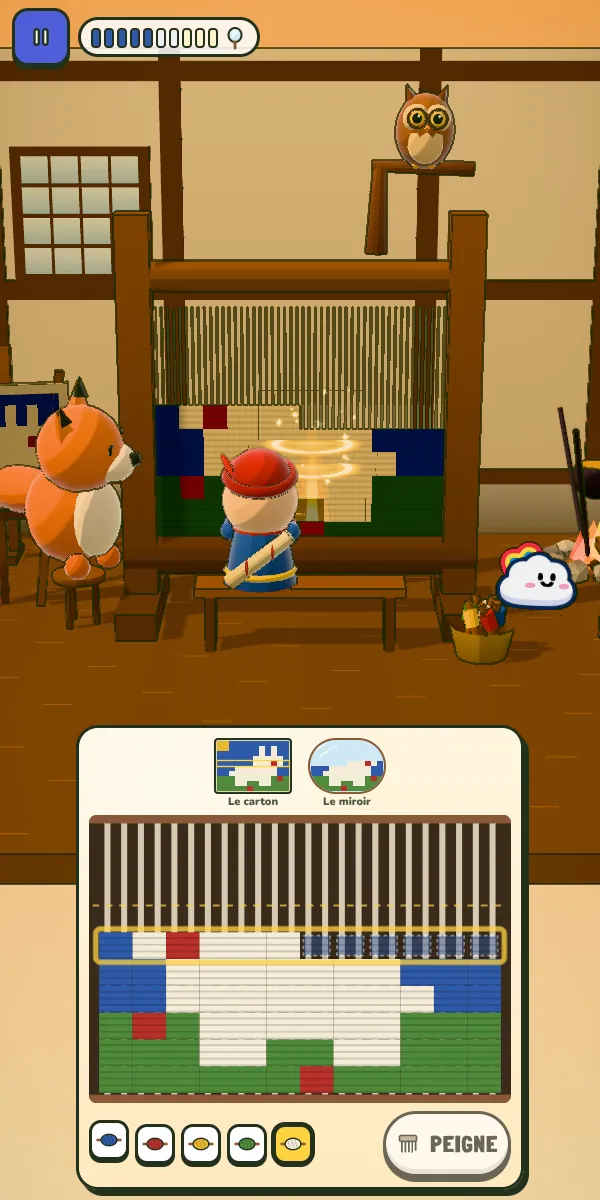
Here Pip is a little apprentice tapestry weaver throwing balls of wool. In the mini-game Pip's tapestry, you weave a rabbit… on the back, like the weaver, whom a little mirror helps to see the front. The tapestry in the chapter is a free reconstruction of the museum's, which is intact.
Beneath the cobbles, the boves
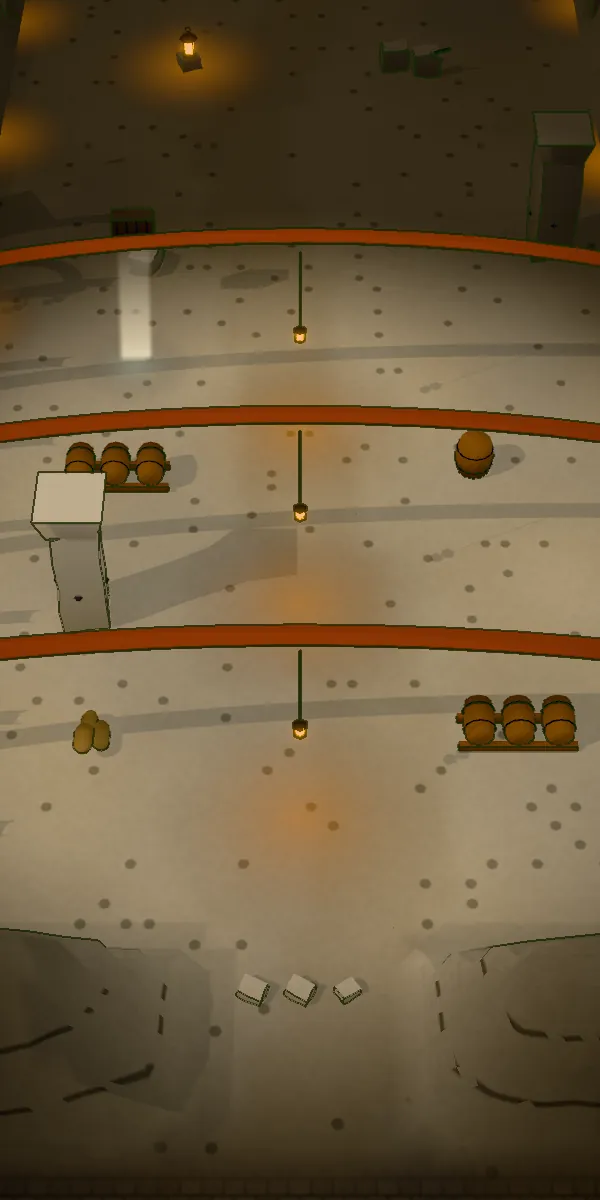
About 12 metres beneath the place des Héros lie the boves, galleries dug into the chalk. From the 9th century, stone for the churches and the first rampart was quarried here; in the 12th century they became the merchants' cellars, at 11 °C all year round. In 1916, tunnellers from New Zealand joined them up with tunnels named after towns back home: Wellington, Auckland, Nelson… The Wellington Quarry has been open to visitors since 2008.
Pip goes down as a little explorer, lantern held high. Here no soldier is shown, friend or foe, no weapon, no flag. The Battle of Arras of 9 April 1917 is told by a page; on screen there are only traces — rails, cables, bunks — and a sleeping greater horseshoe bat that nobody wakes.
The Beautiful Useless One and the giants of the Grand-Place
In 1668, Louis XIV had the citadel of Arras built to Vauban's plans: a pentagon with five bastions. It was never attacked, hence its nickname, "la Belle Inutile", the Beautiful Useless One. Since 7 July 2008 it has been on UNESCO's World Heritage List with eleven other Vauban sites, and its ramparts have become a park. The belfry, finished in 1554, has a golden lion holding a sun at the very top.
Pip is a little market gardener from Achicourt, dressed like the giant Dédé, throwing lollipops. That is because the last chapter ends on the Grand-Place, when the giants of Arras come out: Colas and Jacqueline, two market gardeners from Achicourt who became giants in 1891, and their son Dédé, who arrived in 1995. Market gardeners, with no weapon: that is why the game draws them.
What the game invents
Pip, Russet the fox, Hoot the owl, the Grimoire and the Silence Mist, which wants to hush the town, are invented; its Mistlings — amphorae, cheeses, balls of wool, mice — are dispelled, never killed. The settings are imagined, but every fact on screen has its source.
To visit as a family
- The boves, with the Arras Pays d'Artois tourist office: the guided tour starts from the office, under the town hall.
- The Wellington Quarry, with a guide: one wall honours the New Zealand tunnellers.
- The citadel of Arras, and its ramparts turned park.
The game is not out yet: it is coming soon to the stores. We will tell you more here.
Sources
- Wikipédia — Atrébates · Artois · Trésor des Atrébates · Nemetacum · Trésor de Beaurains (in French)
- Wikipedia — Atrebates · Puy d'Arras · Jeu de Robin et Marion · New Zealand Tunnelling Company
- Wikipédia — Trouvère · Le Jeu de la feuillée · Arras · Tapisserie · Musée des Beaux-Arts d'Arras (in French)
- Arras Pays d'Artois tourist office — The boves · Wikipédia — Carrière Wellington (in French)
- Réseau des sites majeurs de Vauban — Arras · Wikipédia — Citadelle d'Arras · Beffroi d'Arras (in French)
- Colas, Jacqueline and Dédé: Ville d'Arras, "Patrimoine immatériel d'Arras"; Tendances & Co, "Le cinquième géant arrageois" (2020), as cited in the game's fact sheet.

The game in this post Mobile game
Doku — The Lost Chronicle
A cartoon adventure through the history of the Pas-de-Calais: seven episodes, from the coal forest of 300 million years ago to the Moon. Every page is sourced.
- Serious game
- 7 episodes
- 22 mini-games